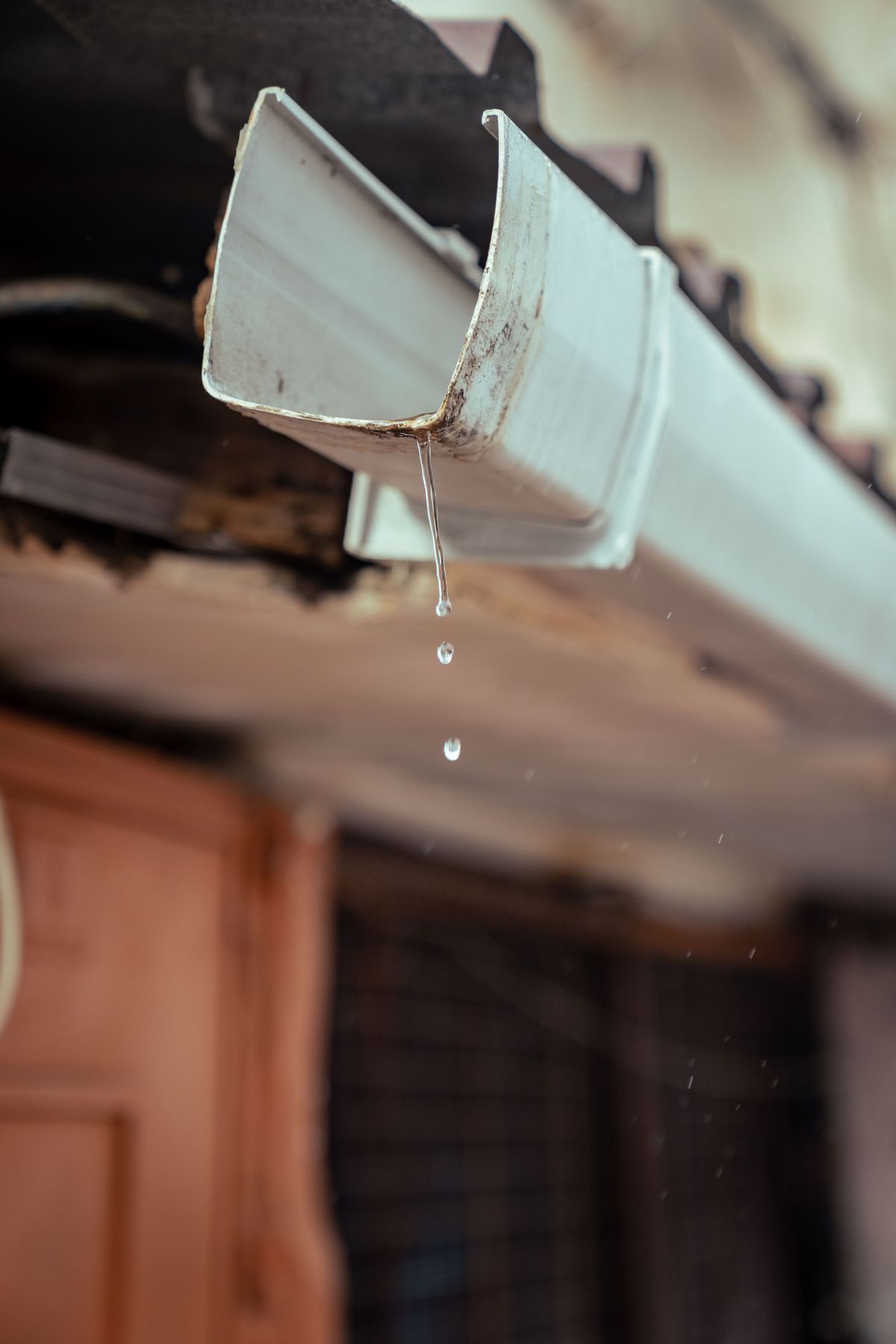
Dampness that follows rain points first to exterior water management or foundation entry, not appliance capacity. Observe the property during rainfall, then inspect the basement before surfaces dry and the evidence disappears.
What matters most
- A time-linked rain pattern is valuable diagnostic evidence.
- Roof water should be carried away from the foundation.
- Do not finish or cover a basement wall until recurring water is controlled.
Inspect outside while it is raining
From a safe location, look for overflowing gutters, disconnected downspouts, water dumping beside the foundation, low spots, and hard surfaces sloping toward the house.
Do not climb ladders, enter floodwater, or work near electrical equipment in a storm. Photograph conditions for a contractor or a dry-weather repair.
Map the first indoor evidence
Check wall penetrations, window wells, cracks, the wall-floor joint, floor drains, sump area, and carpet edges. Mark or photograph the leading edge rather than waiting until the whole material is damp.
White mineral deposits can indicate repeated moisture movement through masonry even when the wall feels dry on inspection day.
Dry safely after stopping entry
Remove standing water only when electrical and contamination risks are controlled. Dry materials promptly; EPA guidance notes that quick drying after leaks can reduce the chance of growth.
A dehumidifier supports drying but should not operate in standing water or on an unsafe circuit.
A measured action plan
- 1Document exterior drainage during rain from a safe location.
- 2Map indoor entry points immediately afterward.
- 3Correct gutters, extensions, grading, or drainage as appropriate.
- 4Use qualified help for flooding, foundation movement, sewage, or electrical risk.
Useful tools to compare
These product categories match the checks in this guide. Compare specifications and current instructions; they are not hands-on test recommendations.
Choose a route that stays connected and discharges safely.
View current options on Amazon ↗02Downspout splash blocksUse where grading and discharge location make it effective.
View current options on Amazon ↗03Water leak alarmsPlace at likely low points without relying on it as the only safeguard.
View current options on Amazon ↗Sources & further reading
- U.S. EPA — A Brief Guide to Mold, Moisture and Your Home ↗
- U.S. EPA — Controlling Moisture in Your Home ↗
- Building America Solution Center — Crawlspace Water Management ↗
Reviewed against the linked sources in August 2026. Product instructions and local codes take priority for a specific installation.