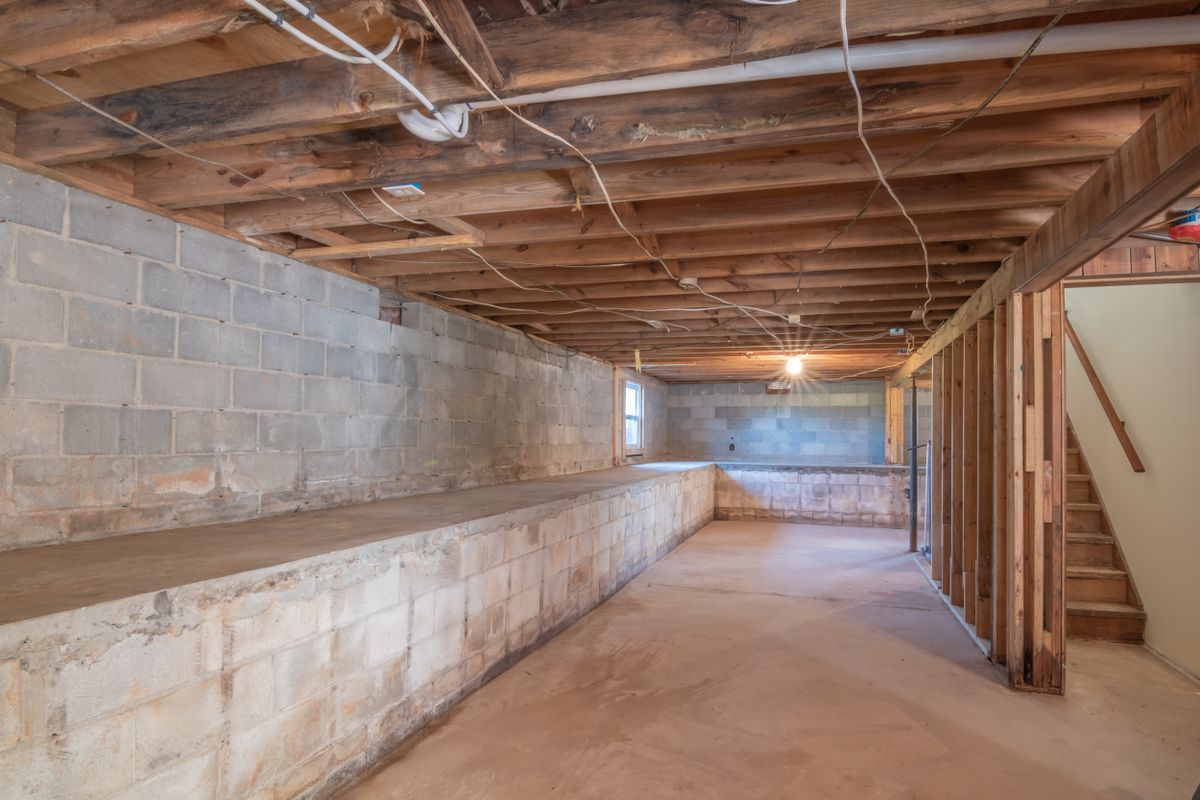
A summer basement that repeatedly stays above 60% RH is too damp for routine storage and deserves action. Warm outdoor air, cool foundation surfaces, ground moisture, and poor drainage often overlap, so a dehumidifier should be paired with a source check.
What matters most
- Cool basement air can reach high RH without a dramatic indoor leak.
- Start outdoors with gutters, downspouts, grading, and visible seepage.
- Size the dehumidifier for the room condition, not only square footage.
Why summer is hard on basements
Warm air carries more moisture. When that air enters a cooler basement, its relative humidity rises and cold walls or pipes may fall below the dew point.
Central air often runs according to the main floor thermostat. The basement can remain cool and damp while the upstairs feels perfectly conditioned.
Separate humidity from bulk water
A dehumidifier manages water vapor; it does not repair foundation seepage. Look for staining, efflorescence, wet carpet edges, wall-floor joint dampness, and changes after rain.
EPA guidance emphasizes correcting leaks and drainage. Clear gutters, extend downspouts, and make sure soil does not direct water toward the foundation.
- Vapor problem: elevated RH with no wet surface
- Bulk water problem: damp spots, seepage, puddles, or rain-linked staining
- Mixed problem: high RH plus intermittent water entry
A stable operating strategy
Close basement windows when outdoor dew points are high. Run a properly sized unit with clear airflow and a reliable drain. Use a separate hygrometer across the room to verify the built-in sensor.
Aim for a steady result rather than rapid cycling. If RH barely changes after several days, inspect drainage, airflow, frost, temperature, and unit capacity before buying another machine.
A measured action plan
- 1Record RH before and after rain.
- 2Inspect gutters, grading, and the wall-floor joint.
- 3Close windows during humid weather and run the dehumidifier continuously for 48 hours.
- 4Escalate active seepage or structural cracks to a qualified local professional.
Useful tools to compare
These product categories match the checks in this guide. Compare specifications and current instructions; they are not hands-on test recommendations.
As an Amazon Associate I earn from qualifying purchases. Your price does not increase.Sources & further reading
- U.S. EPA — A Brief Guide to Mold, Moisture and Your Home ↗
- U.S. EPA — Controlling Moisture in Your Home ↗
- ENERGY STAR — Dehumidifier Buying Guidance ↗
Reviewed against the linked sources in August 2026. Product instructions and local codes take priority for a specific installation.