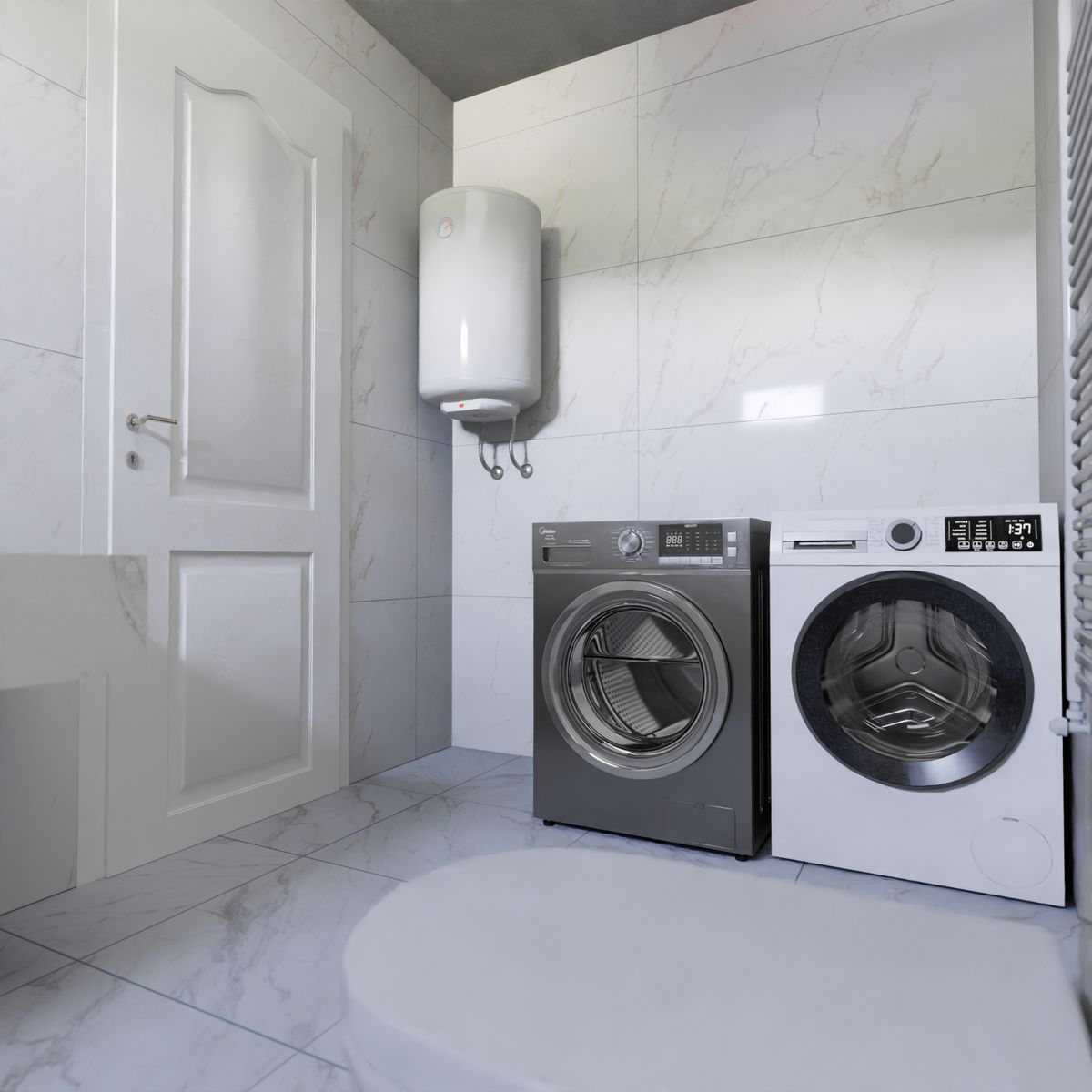
A laundry room should not remain humid long after the appliances stop. Verify that the dryer vents outdoors, inspect hoses and drains, avoid indoor line drying in a closed room, and check whether the room has a path for conditioned air.
What matters most
- A disconnected or restricted dryer duct can add heat and moisture indoors.
- Small washer leaks can hide beneath appliances.
- A dehumidifier should not be used to compensate for unsafe venting.
Start with the dryer
Confirm that exhaust air reaches an outdoor termination and that the duct is not crushed behind the machine. Clean the lint screen every cycle and maintain the duct according to appliance and fire-safety guidance.
A room that becomes hot, humid, or linty while the dryer runs needs prompt inspection. Gas dryers also require correct combustion and venting conditions.
Inspect the washer zone
Use a flashlight to check supply hoses, valves, the drain standpipe, pump filter area, and flooring at the front corners. A leak alarm can provide early warning but does not replace periodic inspection.
Pulling an appliance out can damage hoses or flooring; shut off utilities and follow the manual when access is not straightforward.
Give moisture a way out
Closed laundry closets need the clearances and ventilation required by the appliances and local code. Keep grilles unobstructed and avoid packing storage around equipment.
If RH remains high after leaks and venting are corrected, compare the room with the rest of the home before considering supplemental dehumidification.
A measured action plan
- 1Observe RH while each appliance runs separately.
- 2Verify the dryer termination outdoors.
- 3Inspect hoses, valves, and flooring for small leaks.
- 4Correct venting and leaks before adding a dehumidifier.
Sources & further reading
Content updated August 2026. The linked references support the factual guidance; diagnostic sequences and hypothetical examples are Moisture Atlas interpretations, not reported field tests. Product instructions and local codes take priority for a specific installation.