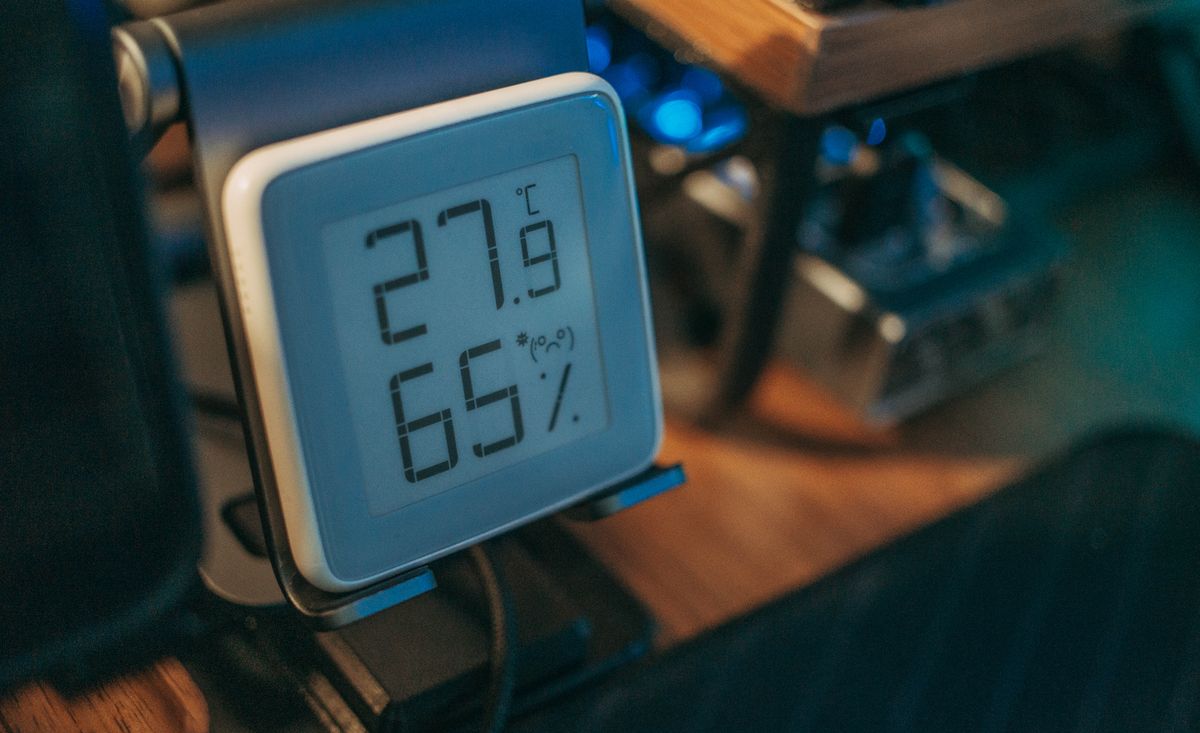
For most homes, 30% to 50% relative humidity is a useful operating range. The U.S. EPA recommends keeping indoor RH below 60% and ideally between 30% and 50%. Your best set point can shift with outdoor temperature, window performance, and whether a room is below grade.
What matters most
- Treat 30%–50% RH as a working range, not a single magic number.
- Persistent readings above 60% deserve investigation, especially in basements and closets.
- Winter condensation may require a lower indoor target even when the house feels dry.
Why one number does not fit every home
Relative humidity changes with temperature. The same amount of water vapor produces a higher RH reading when the air cools, which is why a basement can read wetter than the living room without an obvious leak.
Building materials matter too. Older windows, uninsulated pipes, cold foundation walls, and thermal bridges can reach the dew point before the center of the room feels humid.
Useful seasonal targets
In cooling season, many homes are comfortable around 45% to 50% RH. Below-grade rooms may need active dehumidification even while the central air conditioner keeps upstairs comfortable.
During cold weather, watch windows and exterior corners. If condensation appears, lower the set point gradually and address air leaks or insulation gaps rather than chasing an extremely dry number.
- Summer starting point: 45%–50% RH
- Winter starting point: 30%–40% RH
- Investigate persistent readings above 60% RH
How to measure a room correctly
Use a digital hygrometer away from supply vents, exterior doors, direct sunlight, showers, and the dehumidifier outlet. Place it roughly at breathing height for living spaces and use a second meter in problem rooms.
Let a moved sensor stabilize before making decisions. Compare two meters side by side for a day; inexpensive sensors can disagree by several percentage points.
A measured action plan
- 1Place a hygrometer in the living area and the dampest room.
- 2Log morning and evening readings for seven days.
- 3Note rain, showering, laundry, and HVAC runtime beside each reading.
- 4Act on the pattern and moisture source, not a single spike.
Useful tools to compare
These product categories match the checks in this guide. Compare specifications and current instructions; they are not hands-on test recommendations.
As an Amazon Associate I earn from qualifying purchases. Your price does not increase.Sources & further reading
- U.S. EPA — A Brief Guide to Mold, Moisture and Your Home ↗
- U.S. EPA — Controlling Moisture in Your Home ↗
Reviewed against the linked sources in August 2026. Product instructions and local codes take priority for a specific installation.