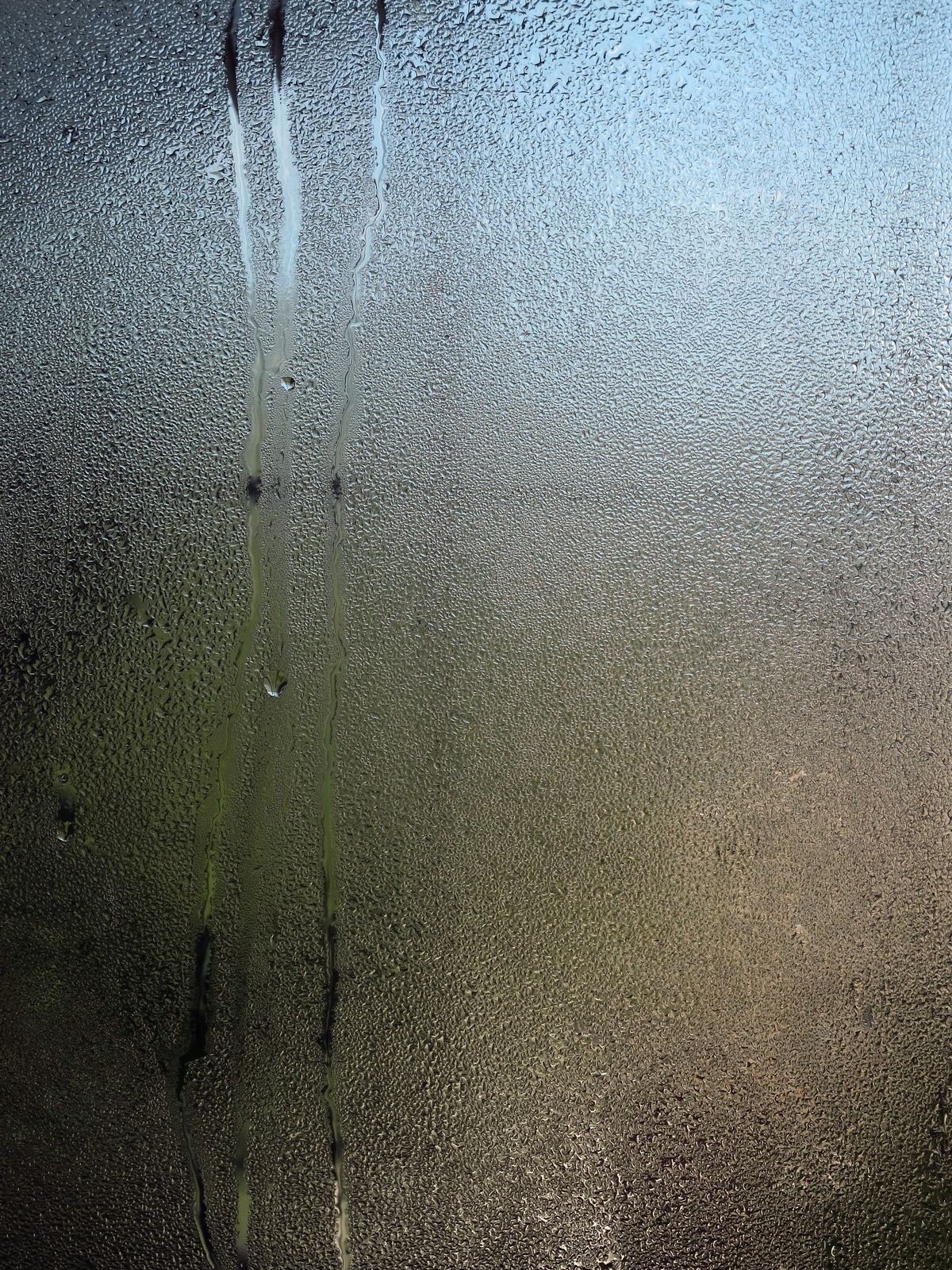
Dew point is the temperature at which the current air would reach saturation. Any surface colder than that temperature can collect condensation. Lowering RH lowers the dew point; warming or insulating the surface raises its temperature.
What matters most
- Condensation is a relationship between air moisture and surface temperature.
- Room-average RH cannot describe every cold corner.
- Use both source control and surface improvement for recurring problems.
A simple example
Imagine room air at 70°F and 50% RH. Its dew point is roughly 50°F. A pipe or window colder than that can become wet even though the center of the room feels comfortable.
The calculator performs the full estimate and shows the margin above or below the measured surface temperature.
Two levers fix the risk
First, lower the amount of water vapor by controlling sources, exhausting showers and cooking, closing humid-air paths, or dehumidifying.
Second, warm the surface through insulation, air sealing, improved window performance, or room-air circulation.
A measured action plan
- 1Measure room temperature and RH.
- 2Measure the suspect surface temperature.
- 3Calculate dew-point margin.
- 4Lower vapor load and improve the cold surface.
Useful tools to compare
These product categories match the checks in this guide. Compare specifications and current instructions; they are not hands-on test recommendations.
As an Amazon Associate I earn from qualifying purchases. Your price does not increase.Sources & further reading
- U.S. EPA — A Brief Guide to Mold, Moisture and Your Home ↗
- U.S. EPA — Controlling Moisture in Your Home ↗
Reviewed against the linked sources in August 2026. Product instructions and local codes take priority for a specific installation.