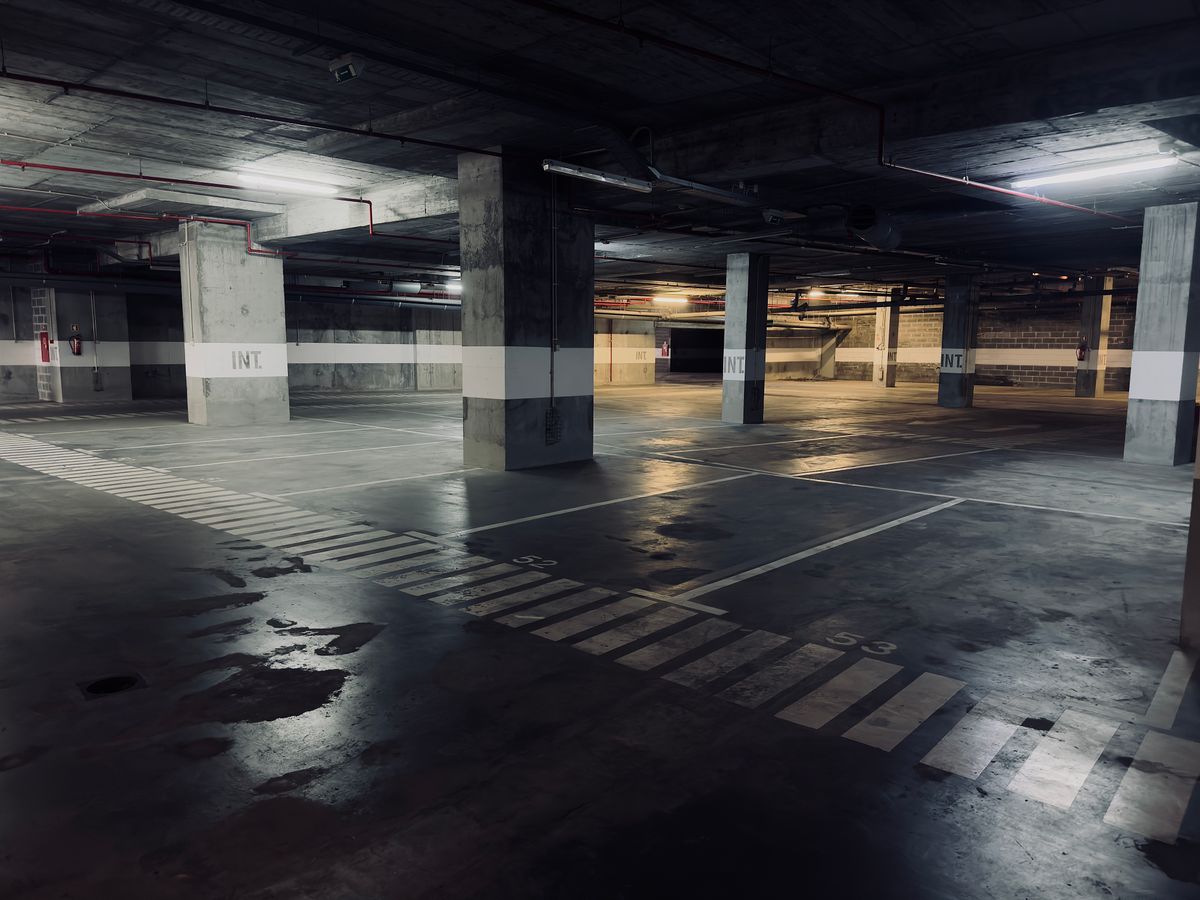
A garage slab can look wet because warm humid air condenses on cool concrete, because moisture moves through the slab, or because rain and vehicles bring water indoors. Timing, weather, and a taped-plastic comparison help narrow the cause.
What matters most
- Warm humid weather after a cool spell favors surface condensation.
- Moisture beneath a taped plastic square suggests vapor movement through the slab.
- Coatings should wait until the moisture mechanism is understood.
Read the weather pattern
Condensation often appears across broad exposed areas when humid air arrives and the slab is still cool. It may be worst near an open garage door and improve as the slab warms.
Water entry tends to track from door thresholds, wall joints, cracks, or parked vehicles. Photograph the first wet locations before walking or driving across the floor.
Use a cautious plastic comparison
Tape a small square of clear plastic tightly to a clean, dry area for the period recommended by a flooring or coating professional. Moisture beneath the plastic and a dry surrounding surface can suggest vapor movement from below; water on top points toward room-side condensation.
This screening step is not a substitute for a flooring moisture test when installing an impermeable coating.
Choose the fix for the mechanism
For condensation, reduce humid-air entry, improve air movement, and consider dehumidification. For bulk water, correct thresholds, grading, gutters, and drainage. For slab vapor, get system-specific advice before coating.
Avoid making a slippery floor more dangerous with fans that blow across standing water. Dry the area and control access first.
A measured action plan
- 1Note weather and garage-door position when wetness begins.
- 2Map the first wet areas and inspect thresholds and cracks.
- 3Compare slab temperature with indoor dew point.
- 4Complete proper slab testing before applying a coating.
Sources & further reading
Content updated August 2026. The linked references support the factual guidance; diagnostic sequences and hypothetical examples are Moisture Atlas interpretations, not reported field tests. Product instructions and local codes take priority for a specific installation.