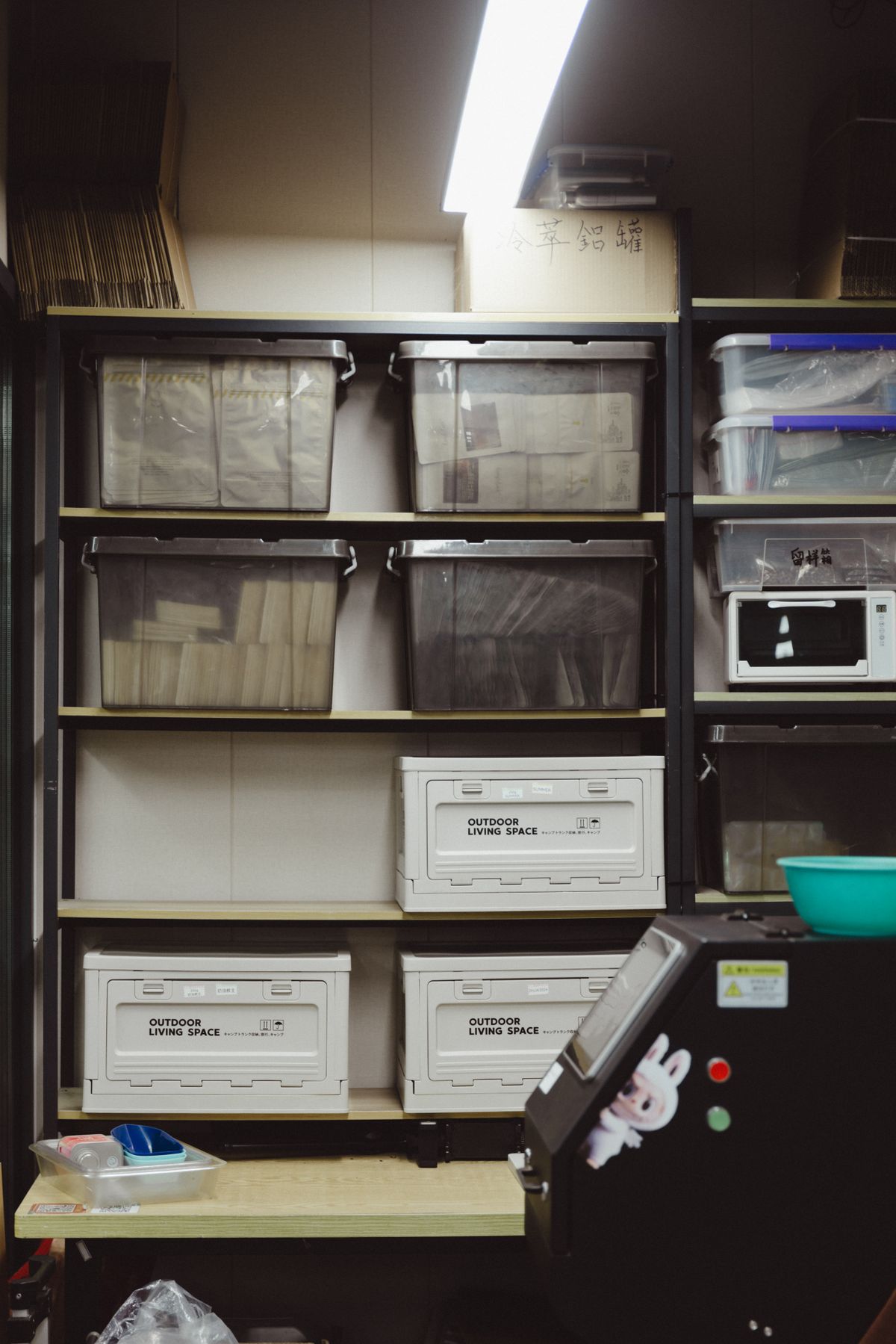
Keep belongings off the slab and away from foundation walls, use clean latching plastic bins for moisture-sensitive items, avoid cardboard, and inspect after heavy rain. Storage protection is secondary to keeping the room below 60% RH and correcting water entry.
What matters most
- Elevate the lowest shelf and preserve airflow behind it.
- Do not seal a damp item inside a plastic bin.
- Irreplaceable paper, textiles, and electronics belong in a conditioned space.
Design the storage zone
Use corrosion-resistant shelving that can tolerate the environment. Leave inspection space at walls, drains, cleanouts, electrical panels, and mechanical equipment.
Avoid placing heavy shelving where it blocks foundation cracks or creates a tip hazard on an uneven floor.
Match the container to the item
Latching plastic bins protect against short humidity events and minor splashes. Add clean, dry contents only and label the outside so lids stay closed.
Cardboard absorbs moisture and can transfer it to stored goods. Vacuum bags are not a substitute for dry conditions and can trap residual moisture.
Build an inspection rhythm
Check RH continuously and inspect bins, shelving feet, wall edges, and floor drains after major rain or snowmelt.
A water alarm at the lowest likely entry point can provide earlier warning, but it should be tested and maintained.
A measured action plan
- 1Move high-value items to conditioned space.
- 2Replace cardboard with labeled latching bins.
- 3Elevate shelving and leave wall clearance.
- 4Inspect after rain and test leak alarms regularly.
Useful tools to compare
These product categories match the checks in this guide. Compare specifications and current instructions; they are not hands-on test recommendations.
Raise bins off the floor and avoid trapping damp contents.
View current options on Amazon ↗02Rechargeable desiccant packsMonitor saturation and keep products away from children and pets.
View current options on Amazon ↗03Digital hygrometersTrack RH away from vents and wet surfaces.
View current options on Amazon ↗Sources & further reading
- U.S. EPA — A Brief Guide to Mold, Moisture and Your Home ↗
- U.S. EPA — Controlling Moisture in Your Home ↗
Reviewed against the linked sources in August 2026. Product instructions and local codes take priority for a specific installation.