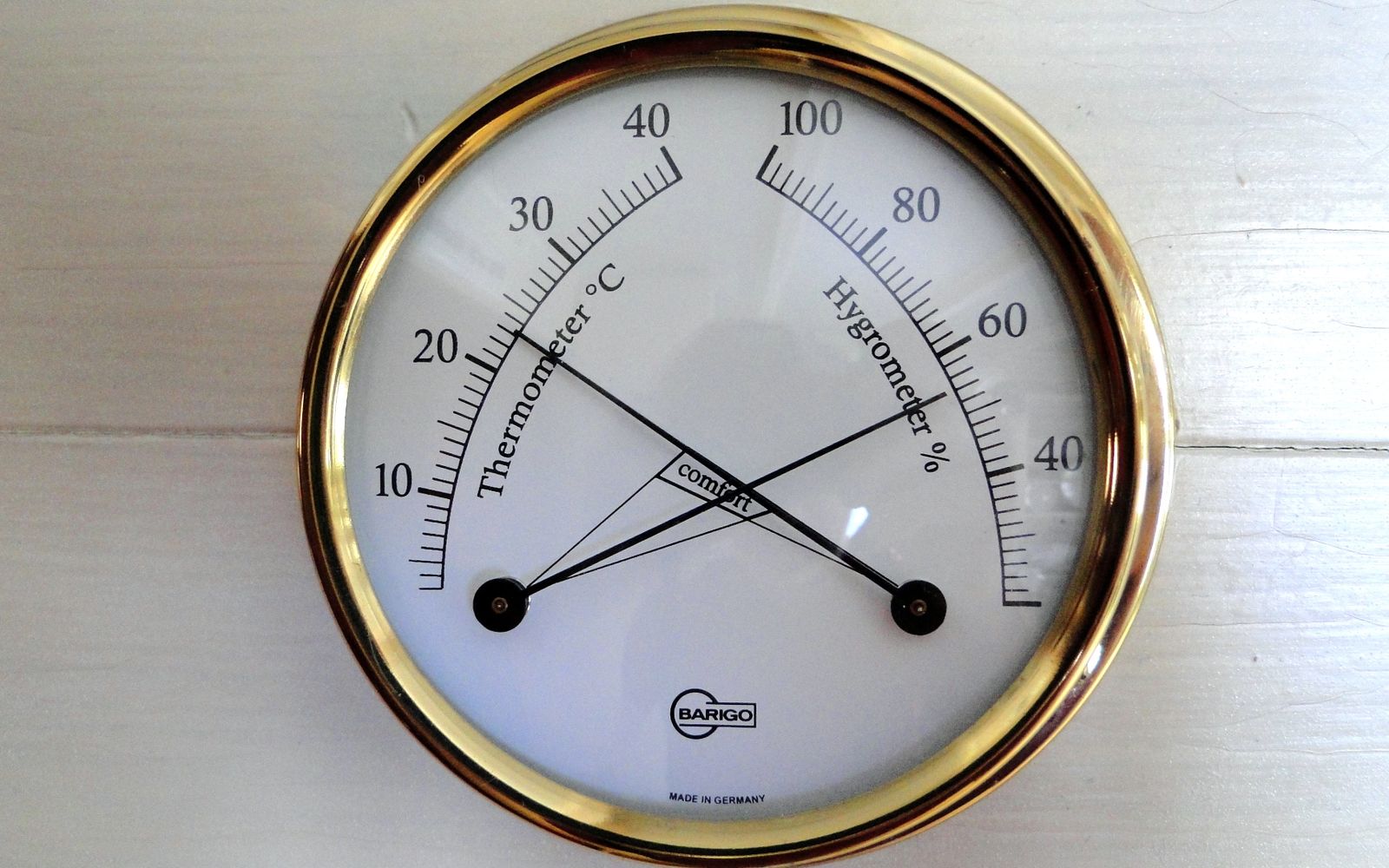
A brief 60% RH reading is not an emergency, but a basement that sits at or above 60% for long periods has little margin at cold surfaces. The EPA recommends keeping indoor humidity below 60% and ideally between 30% and 50%.
What matters most
- Duration matters more than a momentary peak.
- Cold walls, pipes, and stored items may be wetter than room air suggests.
- Aim below 60% while investigating why the reading is elevated.
Think in trends
Review the daily high, low, and hours above 60% rather than a single snapshot. A short rise after opening a door is different from a week-long plateau.
Compare the basement with outdoors and upstairs to learn whether the load is local or building-wide.
Protect vulnerable surfaces and storage
Cardboard, paper, fabric, unfinished wood, and items against foundation walls have less air circulation and can remain cooler than the room.
Use shelving that keeps belongings off the slab and away from walls. Closed plastic bins protect contents from short events but should not hide an unresolved wet floor.
Create more margin
A practical starting target is around 50% RH, adjusted for equipment behavior and condensation risk. Correct drainage, leaks, and outside-air entry before relying on runtime alone.
If the unit cycles normally near 55% and the room has no damp surfaces, focus on stability rather than chasing an unnecessarily low number.
A measured action plan
- 1Review a seven-day RH trend.
- 2Inspect cold surfaces and stored materials.
- 3Set a reasonable target near 50% and observe cycling.
- 4Investigate persistent hours above 60%.
Sources & further reading
Content updated August 2026. The linked references support the factual guidance; diagnostic sequences and hypothetical examples are Moisture Atlas interpretations, not reported field tests. Product instructions and local codes take priority for a specific installation.